
The problem: cataloging is expert work weighed down by routine
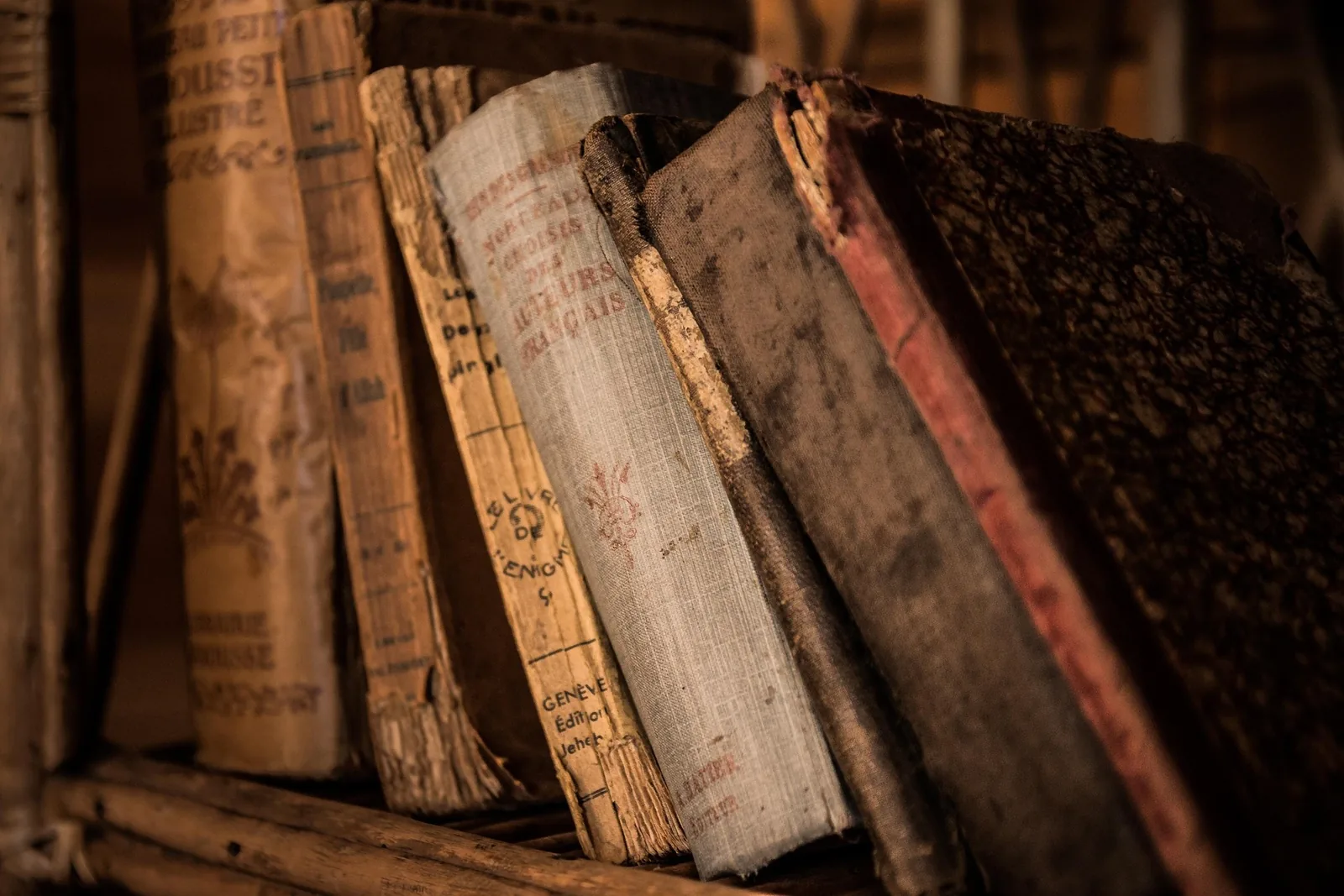
Many institutions manage extensive collections of documents that have not yet been cataloged. At current capacities, cataloging such a volume of material by hand would take decades, so many documents remain inaccessible to researchers and the public.
Cataloging requires reading bibliographic data from documents, verifying it, looking up authorities, comparing existing records in catalogs and only then putting together the final bibliographic record.
A large part of this work is repetitive and time-consuming:
- retyping data from the title page and colophon,
- verifying authors and other authorities,
- searching for existing records in local, union and foreign catalogs,
- filling in fields in the cataloging editor.
The result is a situation where catalogers’ expert capacity is not enough for the size of the collections, and a large part of the documents remains undescribed for a long time — and therefore practically invisible.
This is exactly where AI can help significantly. It does not replace the expert’s work, but takes over routine steps, saves time and gives the cataloger good-quality groundwork.
The solution: a chain of controlled steps instead of a black box
The system is based on a transparent workflow in which every model and algorithm has a clearly defined role and everything is subject to human oversight.
The process typically works like this:
- bibliographic data is read from photographs of the title page, colophon and other pages using multimodal models,
- the text is then normalized and transformed into a form suitable for further processing,
- author names and other data are verified against national and international authority databases,
- candidates are filtered by precise rules, for example by whether the author’s date of birth fits the publication date,
- only then are language models used to rank the candidates by probability according to the document’s context,
- the system offers the most likely option, but also shows other possibilities and always allows manual lookup and editing.
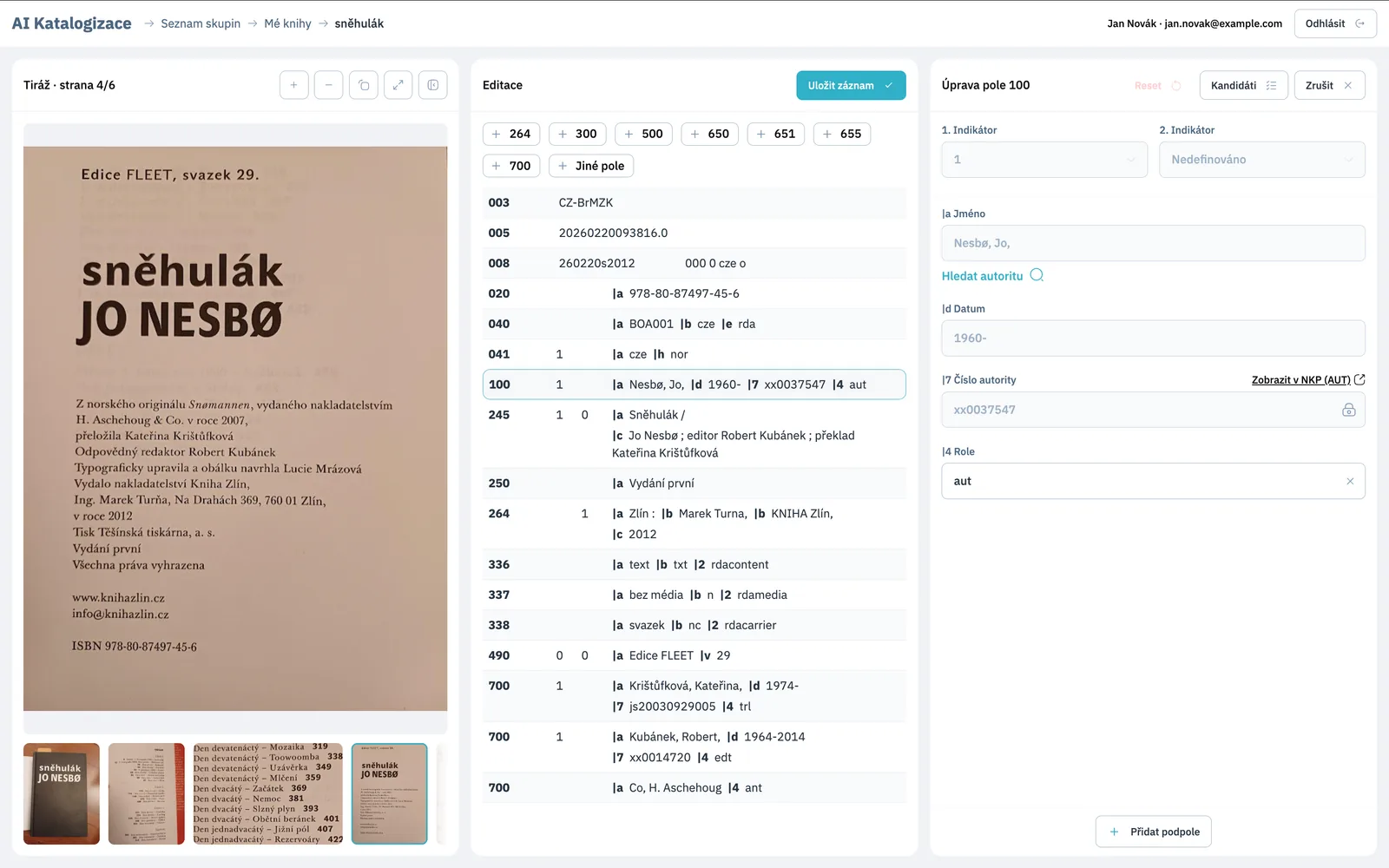
An important principle is that the LLM does not generate the final bibliographic record as a whole. Critical data such as author identifiers, dates of birth and death or authorized forms of names are taken from trusted databases. Likewise, complete existing records are looked up in local, union and foreign catalogs and can be adopted in full or in part.
The result is a system that combines the power of AI with the precision of cataloging practice.
A modern MARC 21 editor as part of the solution
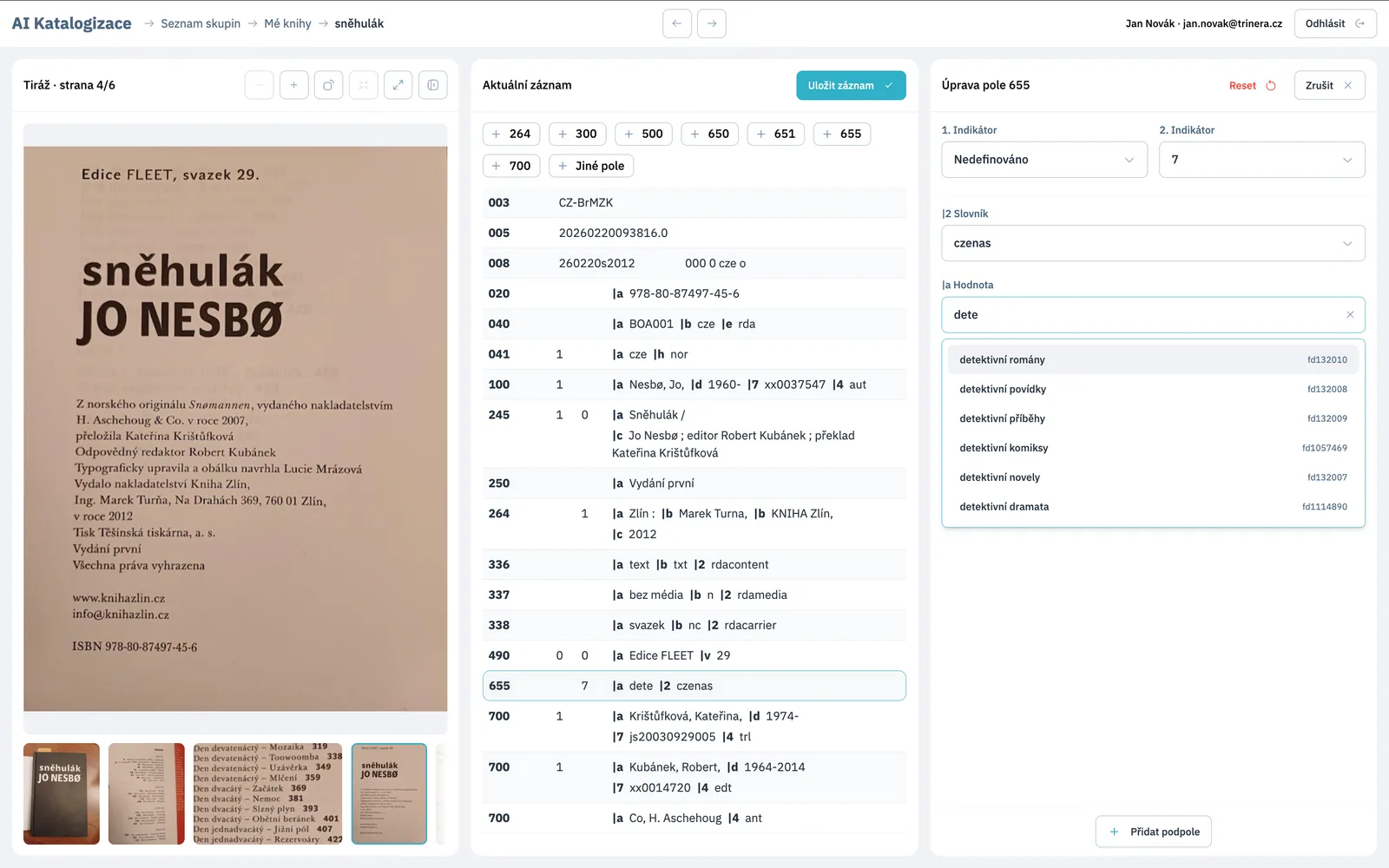
The application also includes a full-featured web-based MARC 21 editor that meets today’s requirements for usability and flexibility.
The editor offers:
- a modern web interface,
- field suggestions,
- configuration according to the institution’s needs,
- adaptation to specific data, rules and catalogers’ habits.
The cataloger thus does not work with an isolated AI tool, but with a complete environment in which they can conveniently review, complete and finalize the draft record.
Benefits of the solution
Implementing the system brings several key benefits:
- a faster cataloging process,
- less routine manual work,
- better work with authorities and existing records,
- greater transparency of individual steps,
- expert control over the result is preserved,
- the workflow can be adapted to a specific institution.
The system helps catalogers focus on the expert assessment of a record instead of mechanical retyping and searching.
Options for further development
The system architecture is modular, which allows it to be extended according to the needs of a specific institution and the development of cataloging standards.
There are many directions in which the solution can be developed further:
- subject description of documents – automatic generation of keywords, subject headings or classification,
- cataloging articles in periodicals – identifying and describing individual articles within one issue,
- checking and extending existing cataloging – analyzing older records, filling in missing data or unifying data,
- enriching records from already digitized titles – using complete scans of a document to obtain information beyond the title page and colophon.
The last scenario in particular opens up new possibilities for working with data. If the system has access to a digitized document in full, it can work with the content of the entire publication, identify topics, extract structure or add metadata that was not previously available.
This allows the system to gradually move from supporting the cataloging of individual documents to comprehensive processing and enrichment of library collections.
At the same time, the solution creates room for a future transition from MARC towards BIBFRAME without fundamentally changing the approach to data processing.
The whole project shows that AI can be a practical and trustworthy assistant in cataloging if it is used thoughtfully, transparently and in combination with expert oversight.
Transferability to other areas
The principle on which the system is built is not limited to library cataloging. The same approach — combining data extraction, normalization, verification against reference sources and controlled assembly of the result — can be used wherever organizations work with documents and need to create structured data from them.
Typical examples include:
- processing documents in public administration (records, forms),
- working with archival materials and collections,
- digitizing and processing technical documentation,
- extracting data from invoices, contracts or business documents,
- creating structured records from unstructured sources in companies.
In these scenarios, a problem similar to that in libraries often arises: experts spend a lot of time on routine tasks that can be automated, while the quality of the data must still be kept under control.
The solution is a system that does not work as a black box, but as a transparent AI assistant that combines automation with human decision-making.