
What the Kramerius digital library is and why it matters
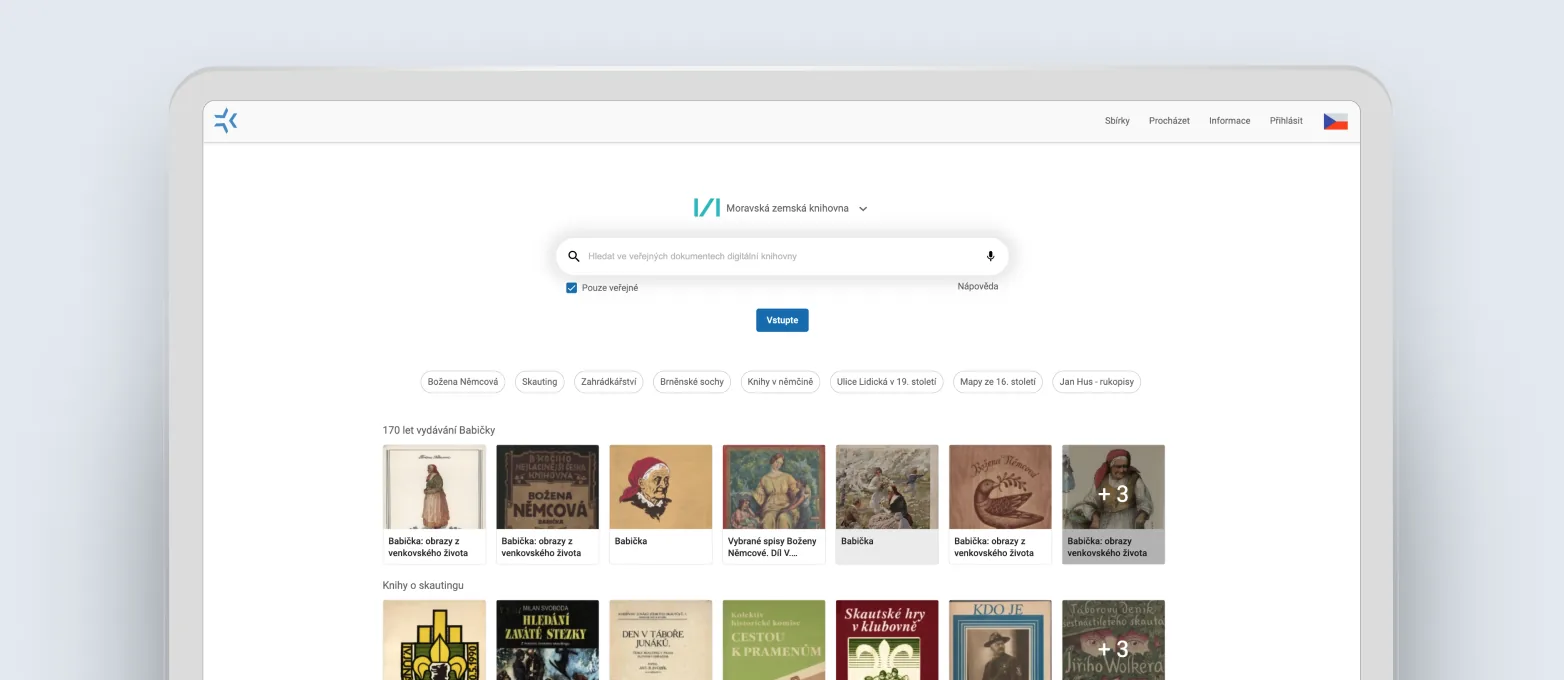
Imagine a system that can bring centuries-old documents back to life and make them accessible in a few clicks. That is exactly what the Kramerius digital library is — an open-source platform whose development we have been involved in for a long time. It has become the foundation for digitizing cultural heritage and making it accessible, not only in the Czech Republic but in a number of European countries. It connects the past with modern technology and opens historical treasures to the general public.
From rescuing endangered prints to the digital era
The origins of Kramerius go back to the 1990s, when Czech libraries began to deal systematically with paper degradation and the fragility of historical collections. The floods of 1997 and 2002, which irreparably damaged many rare documents, pushed institutions to look for more effective ways of protecting them. The first version of the system, called Kramerius 3, was introduced in 2003. It was followed by versions 4 (2010), 5 (with an API) and the current Kramerius 7, which responds to the need for high performance and the management of large volumes of data.
What it can do
- full-text search thanks to OCR technology,
- reading directly in the browser without downloading,
- downloading documents or parts of them,
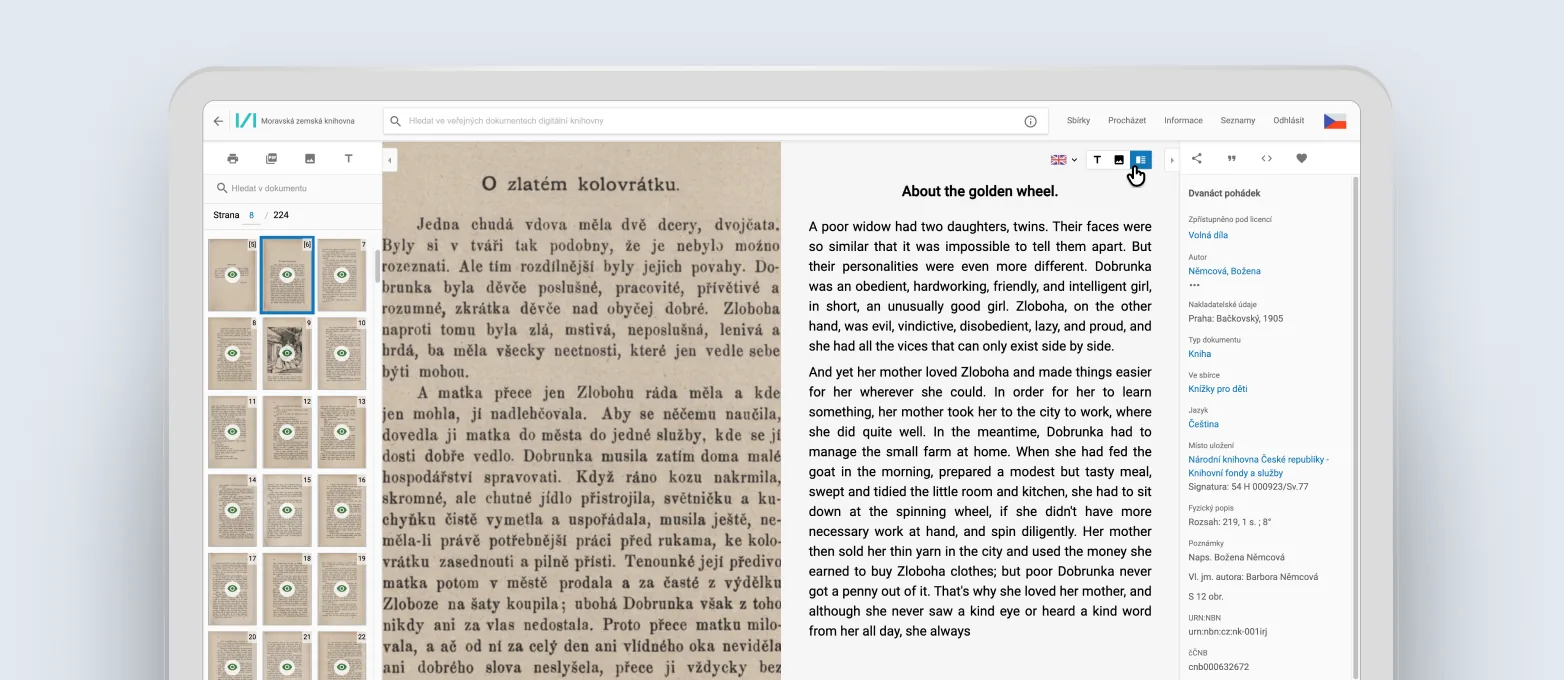
- AI features: reading aloud, translation, summarization and asking questions about a document,
- creating lists of favourite documents and curated thematic collections,
- displaying documents on a map using GPS coordinates (e.g. for historical maps),
- access from home (after logging in) to works that are out of commerce.
Why Kramerius is exceptional
Unlike many solutions abroad, the Czech Republic has a unified system that is clear and trustworthy. It is used independently by almost 50 libraries and other institutions. The individual instances are available to the public through the digitalniknihovna.cz portal, which serves as a practical gateway.
Kramerius is a universal tool: it handles books, newspapers, manuscripts, sheet music, maps and archival documents. It offers a professional environment for historians, curators and librarians as well as for the general public. It also played an irreplaceable role during the pandemic, when digital access to collections made uninterrupted study and research possible.
Who it is for
Kramerius is used mainly by libraries, archives and museums, which can easily make their digitized collections accessible with it. For users, it is a reliable tool for historians, teachers, students and general readers — in short, anyone looking for a high-quality source of digitized cultural heritage.
From dozens of instances to a single search
Kramerius is a proven and powerful system. Dozens of institutions have been building on it for years and manage their installations independently. From the user’s point of view, however, this means going through one instance after another when searching. There is no convenient way to search, for example, all digitized newspapers and other documents in the Czech Republic from one place.
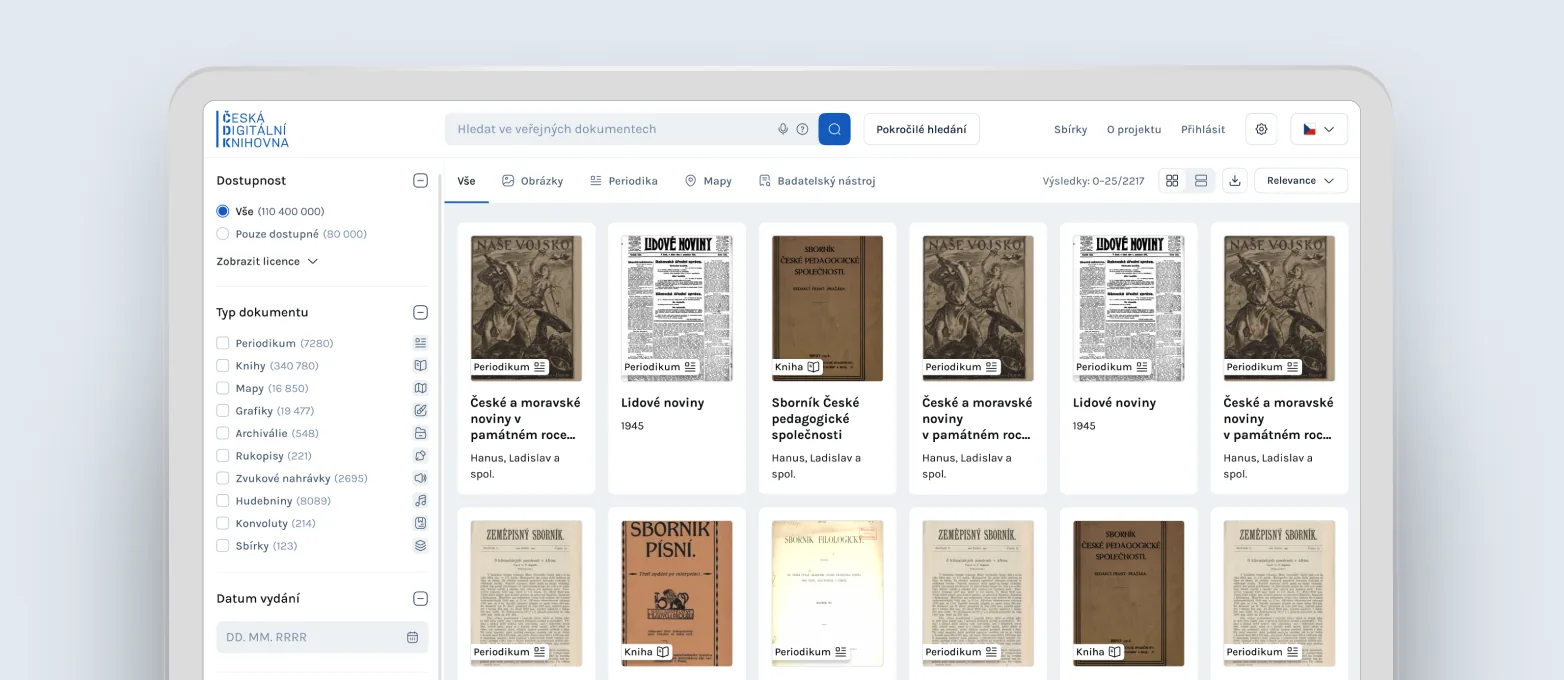
This need gave rise, years ago, to the idea of the Czech Digital Library (ČDK): a shared entry point built on the Kramerius system that unifies search and navigation and puts the user experience first. ČDK has been in development for many years and has overcome many obstacles.
ČDK as the new standard
Today the change is within reach — and the moment is approaching when users will have access to a unified Kramerius that covers everything.
The goal of ČDK is therefore clear:
- unify existing installations into a single place to search,
- make accessible the collections of dozens of institutions in one interface,
- improve existing features and add several new ones,
- ensure a consistent and pleasant user experience across the whole library.
And now comes the final step: a new web interface tailored to ČDK, which we are designing and developing at Trinera.
It will be clear, accessible and fast — so that you can search across digital collections as easily as if you were opening a single library. Users will no longer have to worry about where a document is stored. They will simply open ČDK and find everything they need.
Trinera’s role: we make user experience a priority
Trinera is responsible for designing and developing the new Kramerius user interface, which will become the foundation of the unified ČDK. Our goal is to make access to digital cultural heritage as easy as possible — regardless of where you access it from, how experienced you are with technology or which device you use.
The new web interface is being built from scratch, with an emphasis on modern, sustainable and accessible design. We collect feedback through surveys, and we communicate and consult our steps with libraries. We improve the user experience based on best practice and domain knowledge, and research is ongoing. At the same time, we make sure that both experienced researchers and people opening a digital library for the first time feel at home in the new ČDK.
What we have done so far
When designing the new web interface, we relied on concrete data and international inspiration:
- we researched solutions abroad and analyzed the approaches of international digital libraries,
- a survey is under way among almost 500 users, which has revealed key shortcomings of the current interfaces,
- we work closely with memory institutions (MZK, NK, KNAV, NM and others),
- we are continuously designing and developing a prototype of the web interface,
- we are preparing further usability testing, the results of which we will incorporate into the final version.
What the new design will bring
The new interface will bring features that were not possible in the original web interface:
- responsive design for mobile devices, allowing full use on tablets and phones,
- clear and intuitive controls, making the library accessible even to less tech-savvy users,
- compliance with accessibility standards (WCAG) and easy orientation for users with different needs,
- advanced search with the option to combine multiple conditions and browse extensive collections efficiently,
- search by day and date of publication, making it easier to find periodicals in particular,
- AI tools for summarization, translation and asking questions about the text of documents,
- a new home page with documents divided into categories, making it easier to discover content,
- extended user settings and personalization, including dark mode, user account management and favourite titles.
The interface is designed for further expansion. In the future, we plan, for example, image search, more personalized content and smarter recommendations. The aim is for the library to grow gradually with the needs of its users and remain open to new ways of working with data.

What happens next?
This year we are aiming for public testing with users and the launch of the first version at ceskadigitalniknihovna.cz.
Our vision and wish is that in 2027 ČDK will become the single interface for digital libraries in the Czech Republic. And thanks to Trinera, it will be not only functional, but also friendly, easy to understand and accessible to everyone.
Would you like to get involved in ČDK? Or are you interested in Kramerius? 👉 Write to us or follow Trinera on LinkedIn, Facebook and Instagram, where we share the latest news, previews and challenges. We will also be grateful for any feedback on the current version of the Kramerius digital library. Thank you. 💙