
The system was created as a solution for working with library data in MARC 21, MODS and the indexes of the Kramerius digital library. Thanks to its universal architecture, however, the same principle can be used in other fields where organizations work with large datasets and need to analyze them, check their quality or report on them.
The problem: the data exists, but working with it is complicated
Many organizations manage large amounts of data that have been created over a long time in different systems. The data often has a complex structure, and its quality gradually deteriorates due to migrations, manual edits or changes in rules.
The typical problem is that:
- regular domain experts cannot analyze the data themselves because it requires knowledge of databases or scripting,
- every analysis or data check means a request to the IT department,
- communication between experts and IT leads to delays and misunderstandings,
- corrections and data checks are therefore often postponed or never carried out.
In libraries, this problem shows up, for example, when working with catalogs and digital libraries. Changes made in the catalog may not automatically be reflected in the digital library, inconsistencies arise and the quality of the metadata gradually declines.
The solution: an analytical tool accessible directly to domain experts
Anakon solves this problem by making it possible to work with complex data through an intuitive web interface.
Users can:
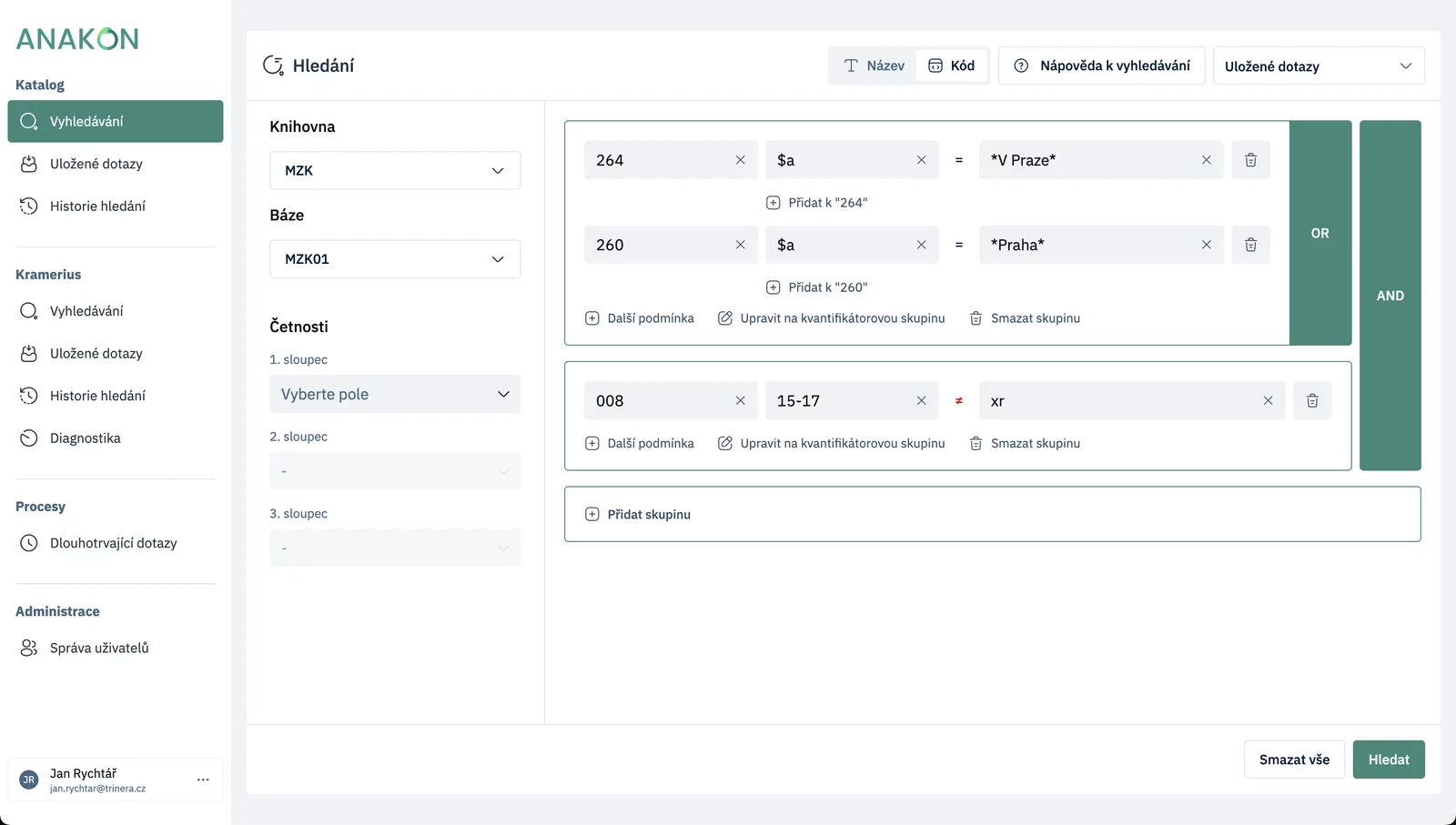
- create advanced queries over the data without knowledge of SQL or programming,
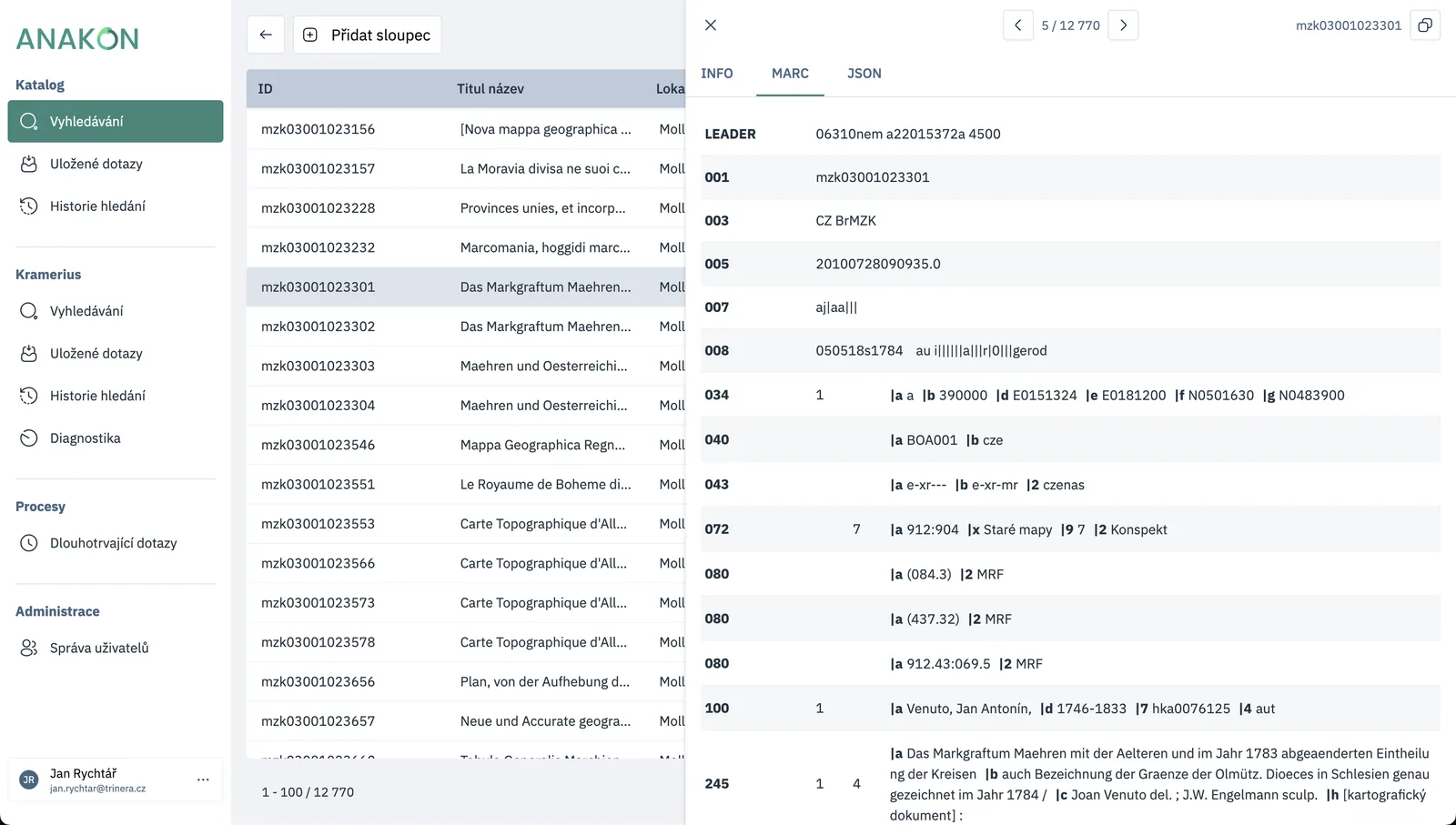
- filter records by logical conditions or text patterns,
- work with a complex data structure,
- analyze data across multiple sources at once,
- display results in clear tables,
- export results for further processing.
Clean data saves time and money
Implementing Anakon brings organizations several key benefits:
- faster data analysis without involving IT specialists,
- higher data quality, because checks can be carried out directly by domain experts,
- time saved in the IT department, which no longer has to deal with one-off analytical requests,
- a better overview of the data thanks to analytical views and visualizations.
Transferability to other fields
The principle behind Anakon is not limited to library data. The same approach can be used wherever organizations work with large datasets and need to analyze or check them.
Typical examples include:
- business and CRM systems,
- customer or product databases,
- internal documentation and corporate metadata,
- logs and operational data of IT systems,
- data analytics in public administration.
In these situations, a similar problem often arises: domain experts need to get information from the data, but their access is mediated by the IT department.
The solution is to create a specialized analytical tool that makes working with data accessible directly to those who need it. This removes communication barriers between experts and IT and significantly speeds up working with information.