
.png)
.png)
ENG


An information system for the National Film Archive (NFA), which manages an extensive collection of film materials, posters, photographs, scripts, and other documents.
Over the decades, data on these collections was maintained in various software systems with differing data models and inconsistent metadata quality. Therefore, the NFA decided to build a new information system to address the following challenges:
So, in Trinera, the following system is being developed: Filmodel – a web application providing a unified interface for viewing, cataloging, and searching selected types of collection items, including authority records and event logs.
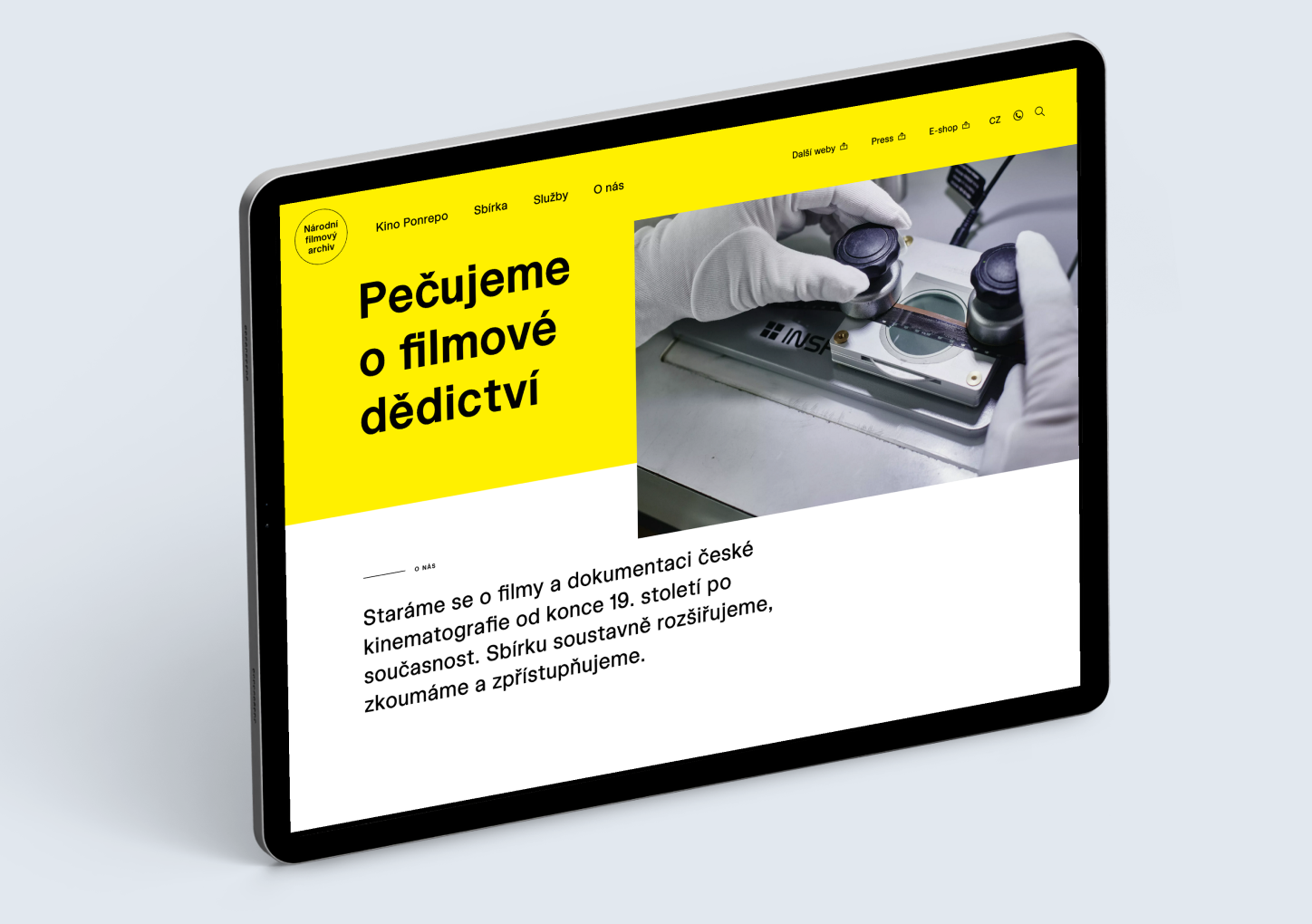
The Filmodel project began with an extensive analysis of existing metadata sources. The goal was to map data fields and their meanings, and to create a mapping schema between the old authority record structures and the new target database, which will provide records according to FIAF standards. Trinera analyzed the data for the authority module, while the NFA handled the filmographic data and visual materials.
Based on the previous analysis, authority metadata has been migrated to a new structure that extends the Central Archival Module (CAM) metadata standard, while the NFA has been working on converting filmographic metadata from current systems to the new standard in accordance with FIAF recommendations.
The modular architecture stores data for different content types in separate databases (PostgreSQL), with a secondary Elasticsearch database used for search. Communication with the frontend (Angular) takes place via an API.
The project primarily includes a web-based user interface that partially mirrors the system's modular structure. Users will be able to switch between modules:
Each module allows you to view, edit and search data that is linked across the entire system using identifiers. In addition, there is a comprehensive mechanism for user permissions and record status, which monitor who has access to records and the mode in which they can work with them.
Every change is recorded in the audit log and based on this data, it is possible to subscribe to change tracking. In some modules, it will be possible to create custom lists, merge duplicate records, etc.
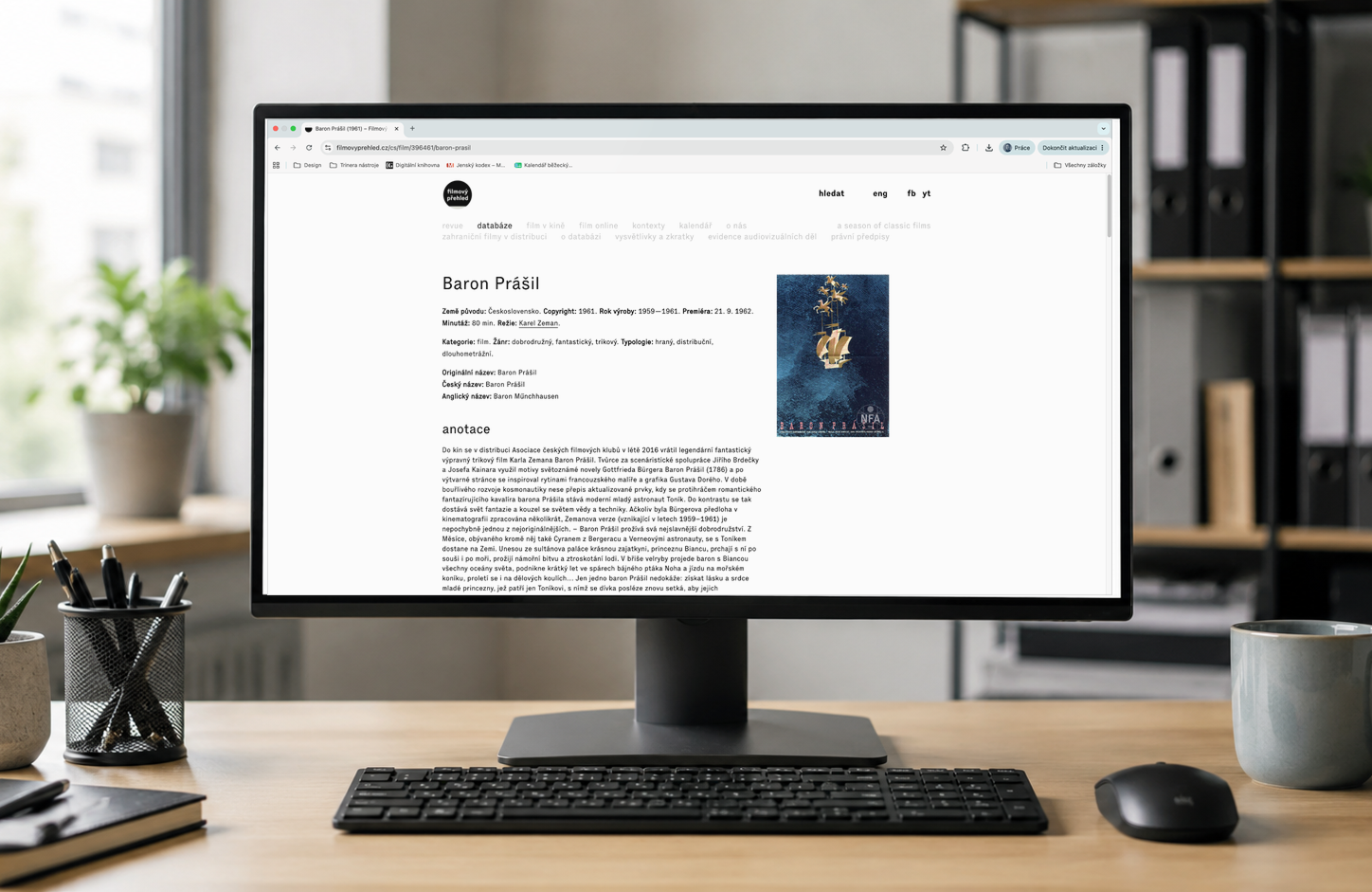
The development of the core functionality of the Filmodel system, in collaboration with Trinera, is slowly nearing completion. The NFA is now responsible for the sustainability and development of further features. Some have emerged from the current development process, while others are appearing gradually as the fields of archiving and information technology evolve.
In the future, in addition to improving and expanding some existing features, there is the potential for integrating artificial intelligence tools for automatic relationship inference, semantic searching within film descriptions, or recommending similar titles.
During development, Trinera combined deep knowledge of memory institutions with modern software development, allowing them to be an equal partner not only on a technological level but also with regard to the needs of archive staff and long-term data sustainability.


