.png)
.png)
ENG


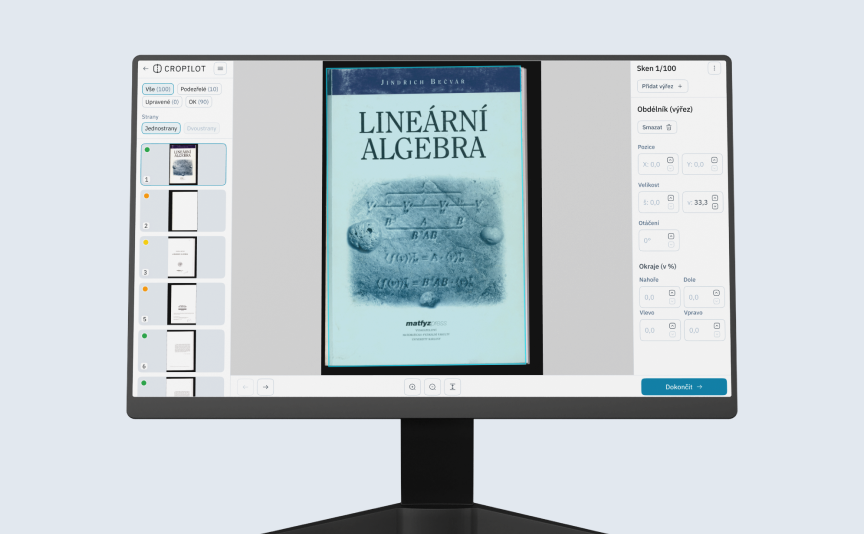
Cropilot is a tool that helps accelerate one of the most time-consuming parts of digitization: scan processing. Using AI, it automatically recognizes pages, suggests their cropping and rotation, and allows the user to easily check or adjust only those results that truly need it. This saves time, reduces manual labor, and simplifies the processing of large digitization batches.
.png)
Library data are vast, vibrant and constantly changing. They migrate, replenish, repair. They often arise for decades and carry historical layers of older rules, retroconversions, and manual interventions. And when one begins to systematically review an institution through a catalog or digital library, one quickly discovers that one patch reveals other problems.

Digitální knihovna Kramerius už více než dvě dekády zpřístupňuje historické dokumenty široké veřejnosti. Dnes se připravuje na zásadní proměnu – vzniká jednotná Česká digitální knihovna (ČDK), která propojí sbírky desítek institucí do jednoho místa. Trinera hraje klíčovou roli: navrhuje a vyvíjí nové webové rozhraní, které bude přehledné, přístupné a připravené na budoucnost.

In our previous articles, we demonstrated how this tool overcomes the limitations of traditional full-text search and makes information from digital libraries more accessible. In this article, we will examine the tool from a more technical perspective: how we selected the data, what technical and content-related limitations we overcame, and what challenges semantic search presents. This opens up new possibilities while placing higher demands on data quality, linguistic analysis, and how results are processed.
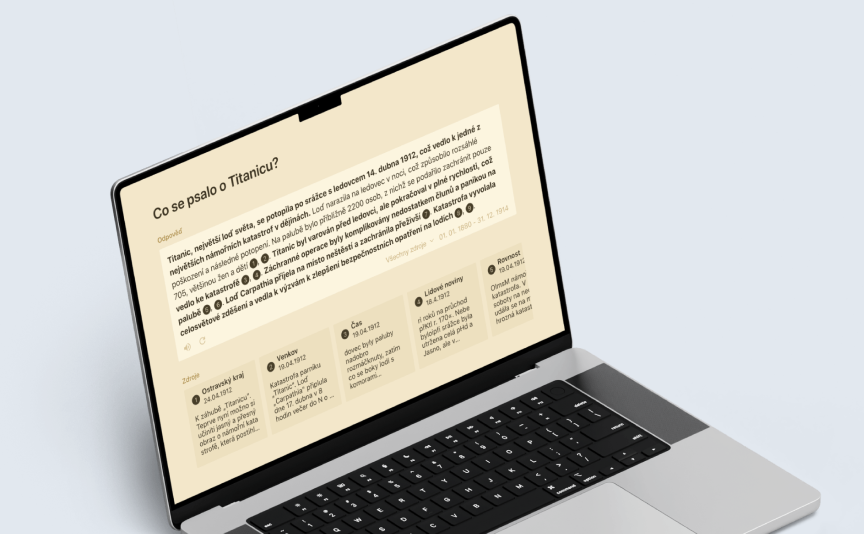
Working with historical newspapers is now more convenient and accessible than ever. We extended the available period to 1880—1914, added the ability to filter queries by time range, and removed the need to log in. This makes it easier to track the development of topics over time, to perceive the reactions of the press to specific events, and to ask questions more thoughtfully — with regard to time and context.

Artificial intelligence is starting to transform the world of digital libraries, which is a true rarity here in the Czech Republic. At Trinera, we work with tools that would have sounded like science fiction just a few years ago. Features like text-to-speech, translation, and automatic summaries directly within the library interface are not yet common even abroad, which is exactly why we find their development so exciting. The Kramerius digital library now offers three new AI features that take reading, research, and information discovery to a whole new level. Whether you are a student, researcher, librarian, or curious reader, these new tools will help you save time, access previously unavailable information, and streamline your work with content.

Searching through historical documents is becoming a thing of the past—literally. Paměť novin is revolutionizing historical text retrieval using semantic analysis and artificial intelligence. Forget about exact phrasing and struggling with OCR errors; this innovative tool understands your query in natural language and serves up relevant articles in seconds. Just enter your search and dive into authentic reports from the past.