
Our know-how comes from work for libraries, museums, archives and other memory institutions, where large datasets, expert content and complex operational dependencies meet. We apply the same principles to presentation websites, landing pages and applications. Experience from commercial and e-commerce environments is brought to our projects by Helena Kočnar, Lead Designer & Brand Specialist.
When this approach helps you
- You are planning a new website or a redesign and need to set priorities and the scope of the investment.
- Visitors do not understand your offer or struggle to find important information.
- Your website does not bring the expected inquiries or bookings and you need to find out what stops people from continuing.
- Your team keeps answering the same questions or finds it hard to update content.
- You have extensive content or data that needs to be made clearly accessible.
We tackle these situations across industries. We always want to know what people need to get done on the website and how the solution should support your business or operational goals.
How research helps you decide
Research provides the basis for decisions that affect the budget, the shape of the website and its management:
- What to invest in: we set priorities and check whether features are needed before development.
- What to change on the way to an inquiry or purchase: we find out where people hesitate and what stops them from continuing.
- Which information to add: we check that the offer is clear and that answers to important questions are easy to find.
- How to simplify management: we take into account the work of the people who update the content.
- What to validate before delivery: we test important decisions on an interactive prototype.
At the start, we set goals and recommend how to evaluate them. Depending on the project, this may be completed forms, bookings, user task success or the time needed to update content. If support after launch is part of the collaboration, we evaluate the results together and decide on the next changes.
What exactly you get
Depending on the state and needs of the project, you can get:
- A UX audit with an overview of problems and recommendations ranked by priority.
- Research findings describing user needs and obstacles.
- Website structure and content recommendations for navigation, pages and information hierarchy.
- A visual design of the website that builds on your brand. Depending on the brief, we can also create a visual identity or broader branding.
- An interactive prototype for validating the interface before development.
- A working website according to the agreed brief.
For every recommendation, we explain which problem it solves and what it is based on. You get a basis for decision-making and for your team’s further work.
Not sure whether you need an audit, research or a design straight away? We will review the state of your project with you and recommend a clear next step.
How we work
We base the design on three perspectives: user needs, the organization’s goals and the possibilities of data and technology. We start research with a specific question, combine available data with people’s real experience, and rank recommendations by priority and strength of evidence.
The collaboration has four steps:
- We clarify the goals and review the materials. We look at the brief, the current website, analytics, customer questions and your team’s experience.
- We explore the main uncertainties. We choose suitable methods and adapt the scope to the importance of the decision, time and budget.
- We prepare and validate the design. We turn the findings into content, structure and a prototype. We check that people understand the offer and can complete the main tasks.
- We follow up with delivery. We implement and hand over a working website within the agreed scope. Any support and evaluation after launch are set up according to the project’s needs.
Selected projects
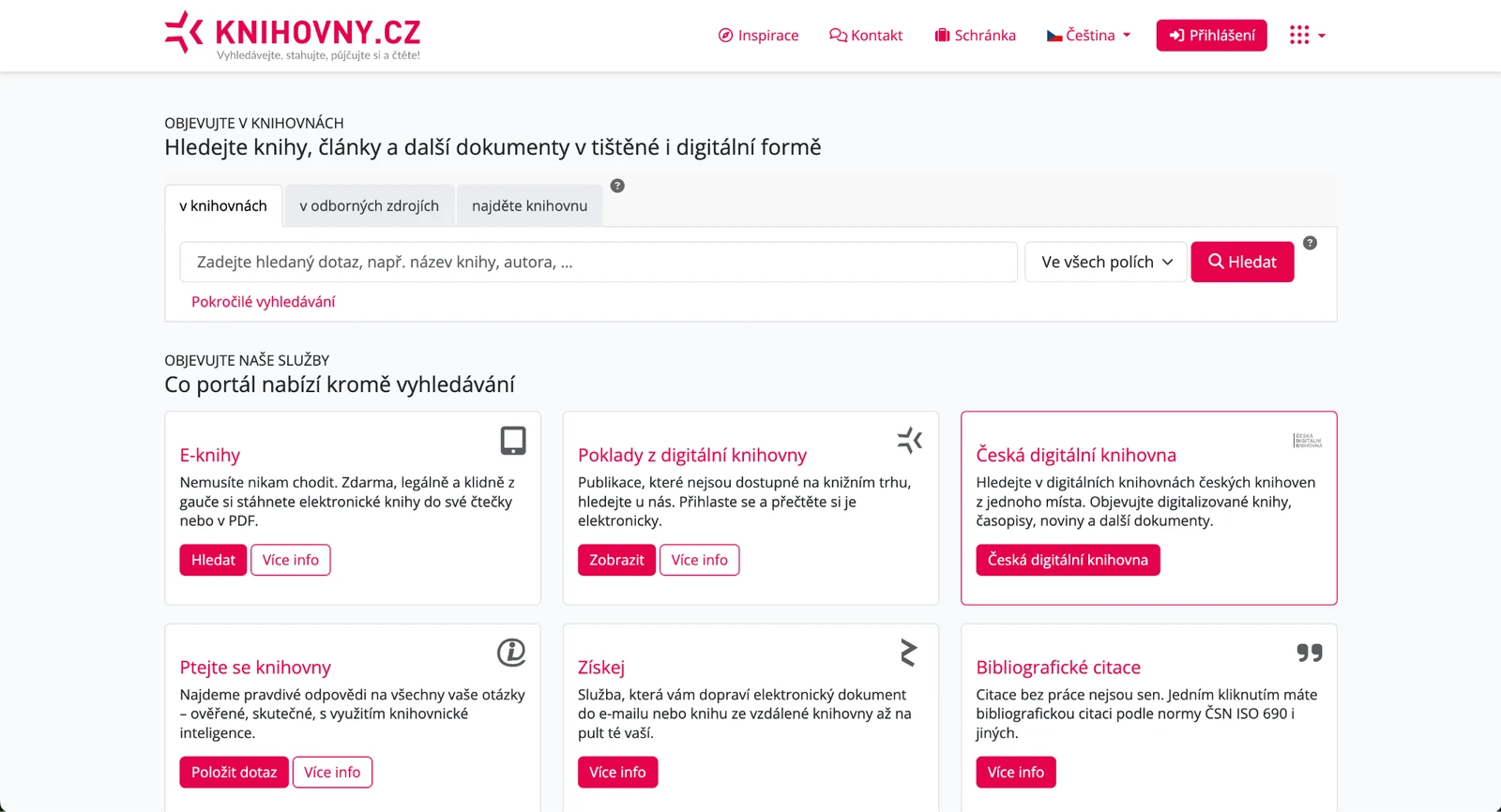
Knihovny.cz: from finding a document to getting it
Identified barrier: Finding a document does not yet mean that the user understands its availability and knows how to get it.
Our role: Research led by Helena Kočnar combined an exploratory survey, four moderated usability tests, operational statistics and an expert UX/UI analysis.
Outcome: We identified barriers in understanding availability and the labeling of electronic resources. The recommendations included a consistent display of availability, a clear follow-up action, clearer labeling of the searched sources and better control over filters.
We apply the same principle to commercial websites: customers need to find the offer, understand the conditions and know how to continue.
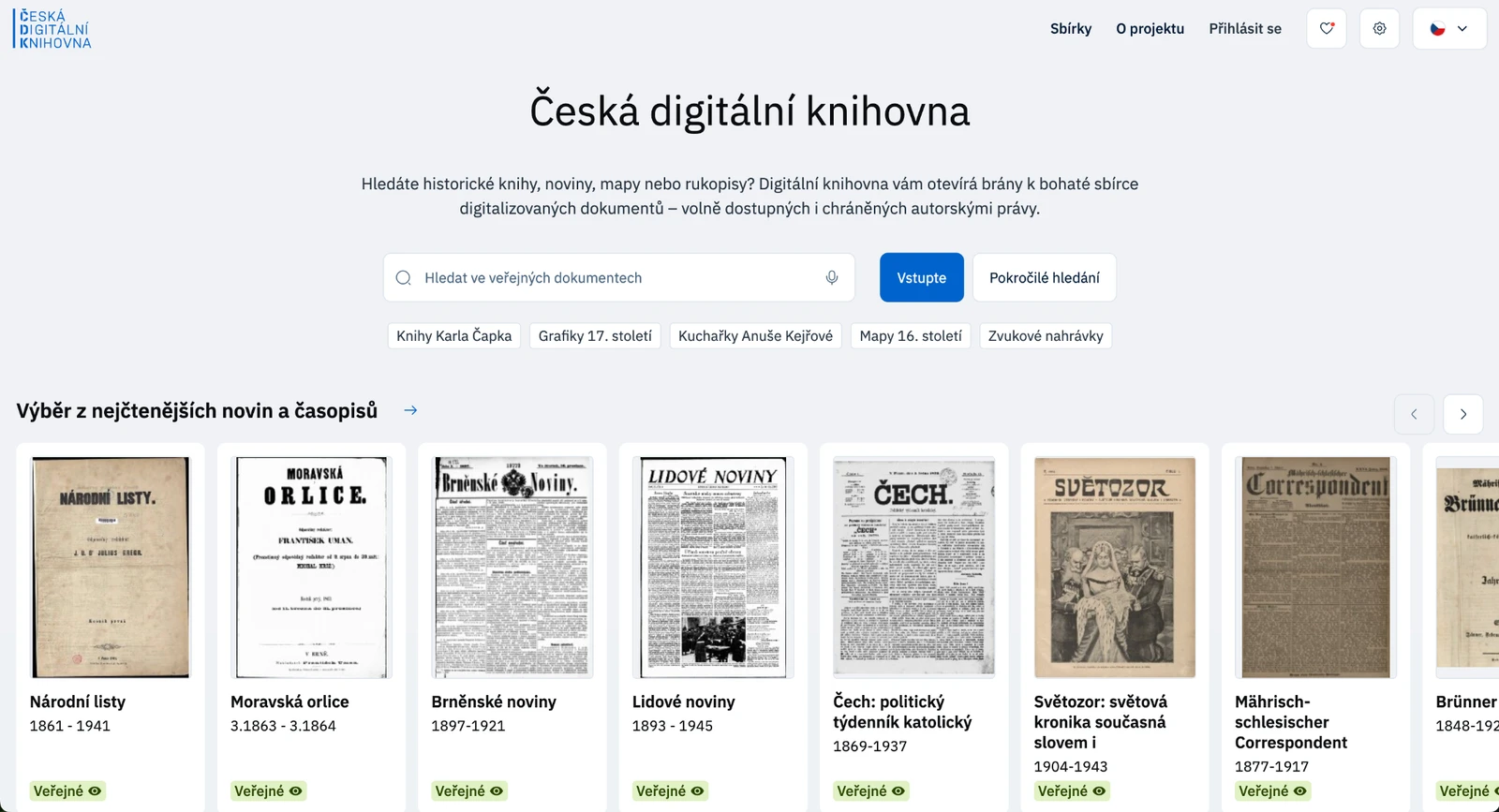
Kramerius and the Czech Digital Library: finding your way in extensive content
Starting need: Make it easier to search and work with digitized documents. In the case of the Czech Digital Library, also make the content of many institutions available in a shared environment.
Our role: We have long been involved in the design and development of the Kramerius web client. We work on the user interface, new features, usability, accessibility and the integration of AI features for working with digital content.
Design focus: We connect searching, browsing results and working with a document into a clear flow, taking into account the possibilities of the data and the dependencies of the whole system.
These principles also apply to designing product catalogs, knowledge bases and customer portals.
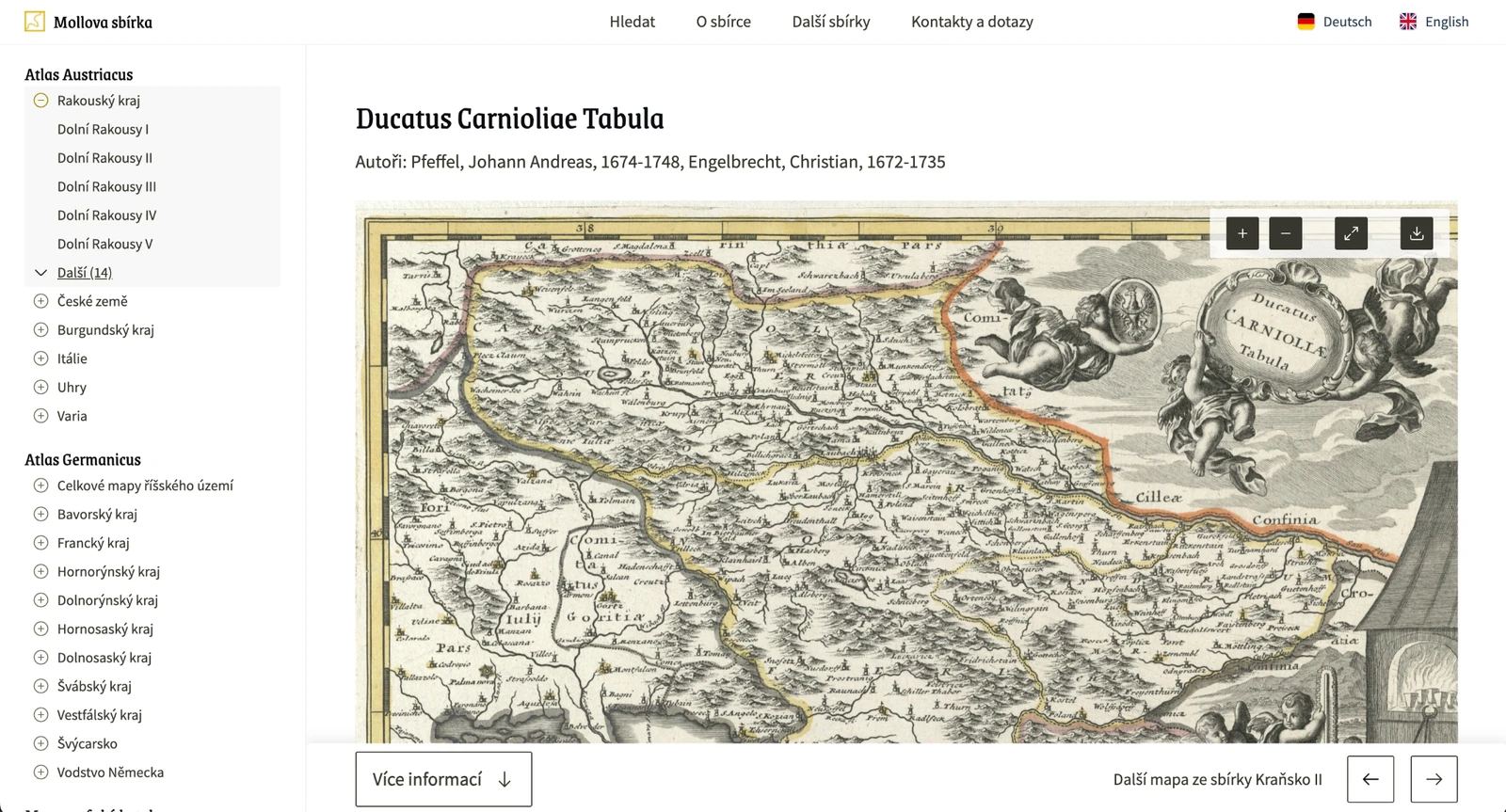
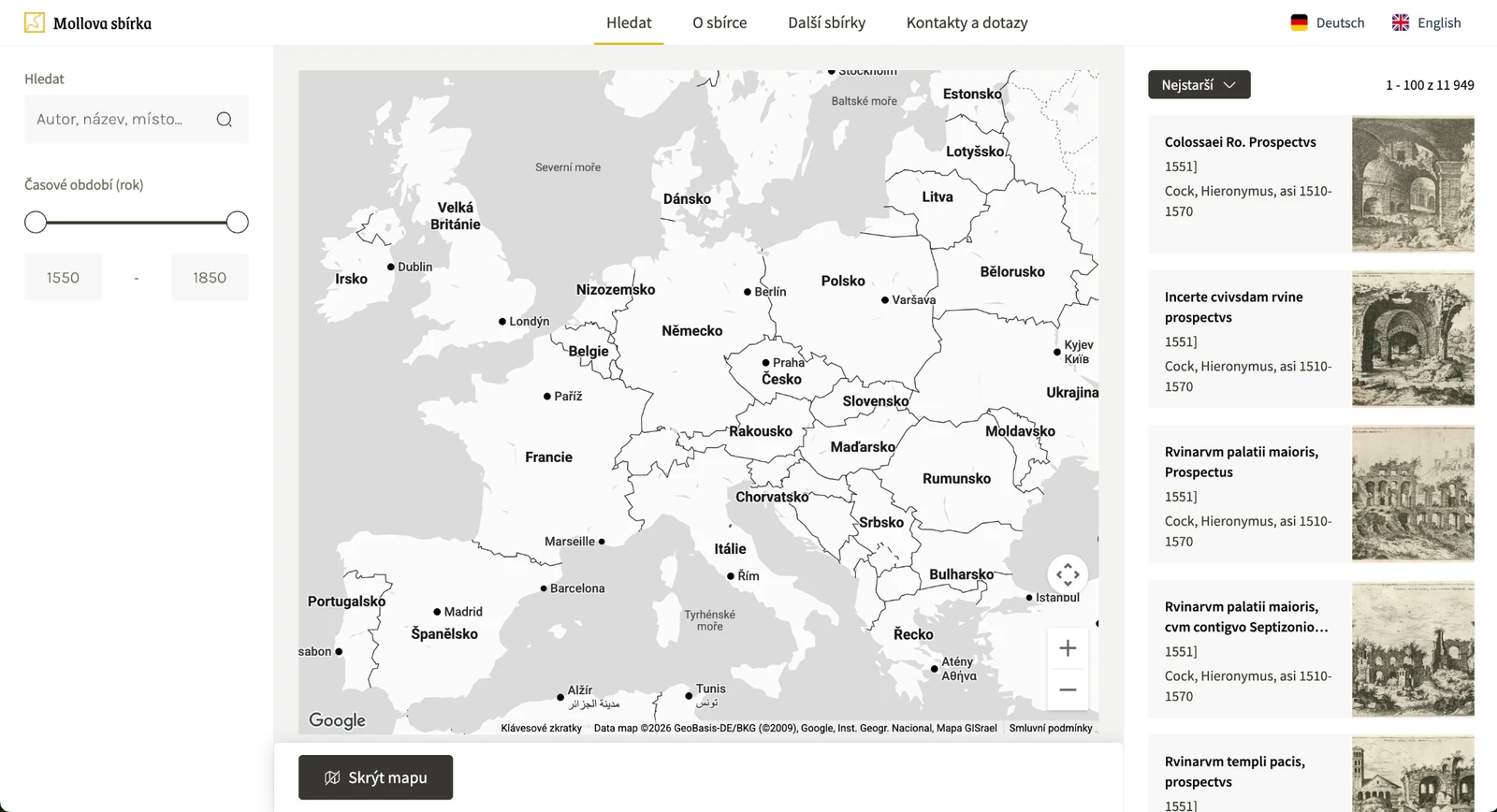
The Moll Map Collection: a website shaped by its content
Starting need: Make a digitized collection of maps and prints accessible both for discovering content and for expert work with details.
Our solution: An interactive web presentation that respects the structure of the collection and the need to view it in high resolution.
What the website enables: Visitors can browse the collection by historical regions, search by territory, author or period, and study individual maps in detail.
The project shows how content and the way it is used shape navigation, search and the display itself. You can use the same approach to present products, projects or expert materials. More about the project
We also design internal and data applications
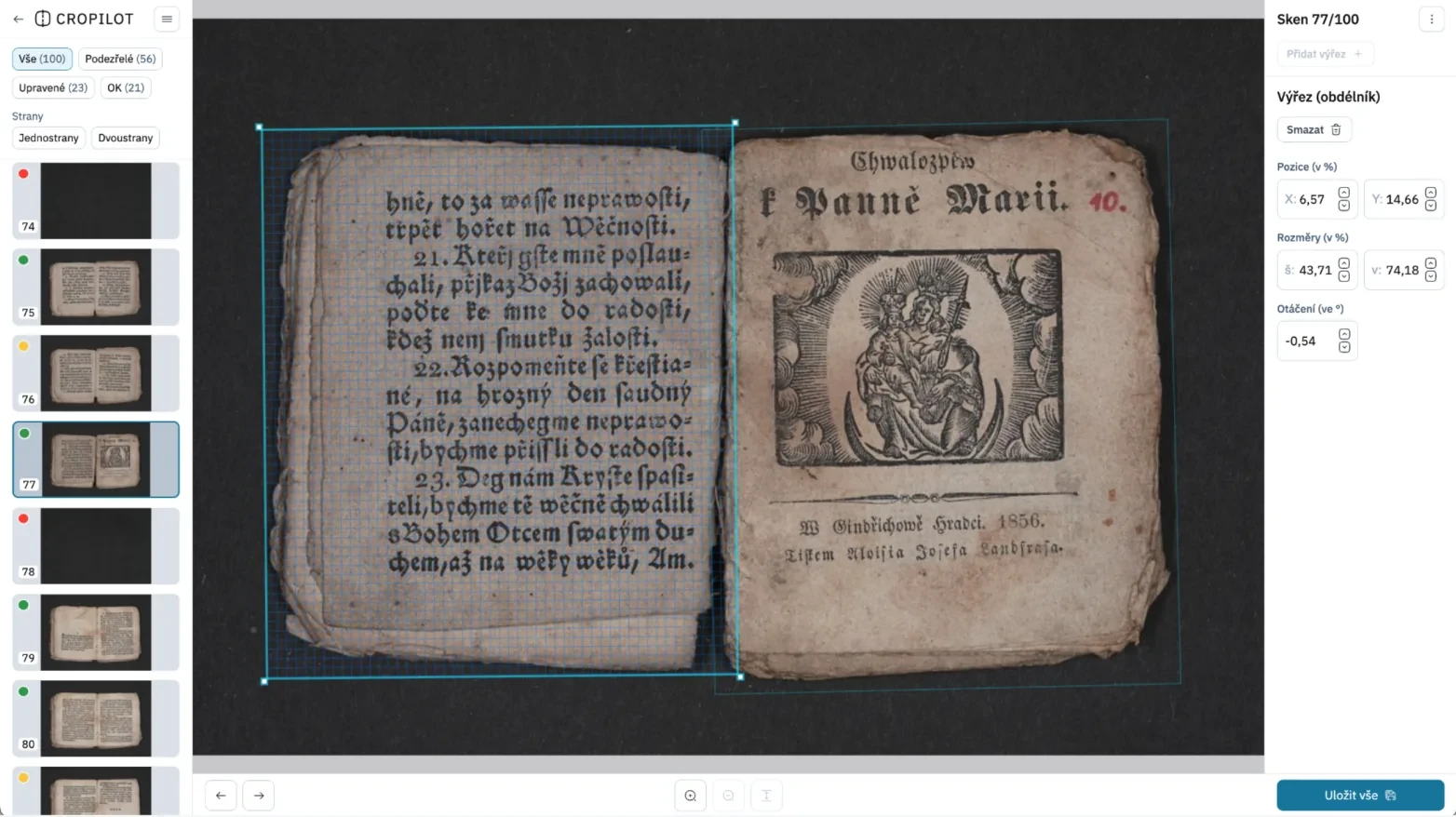
Our product and technical experience is also demonstrated by Cropilot, which automates routine scan cropping, and AI Cataloging, which helps process bibliographic data while keeping expert control. Both solutions respond to the specific needs of institutions’ everyday work.
Who will lead your project
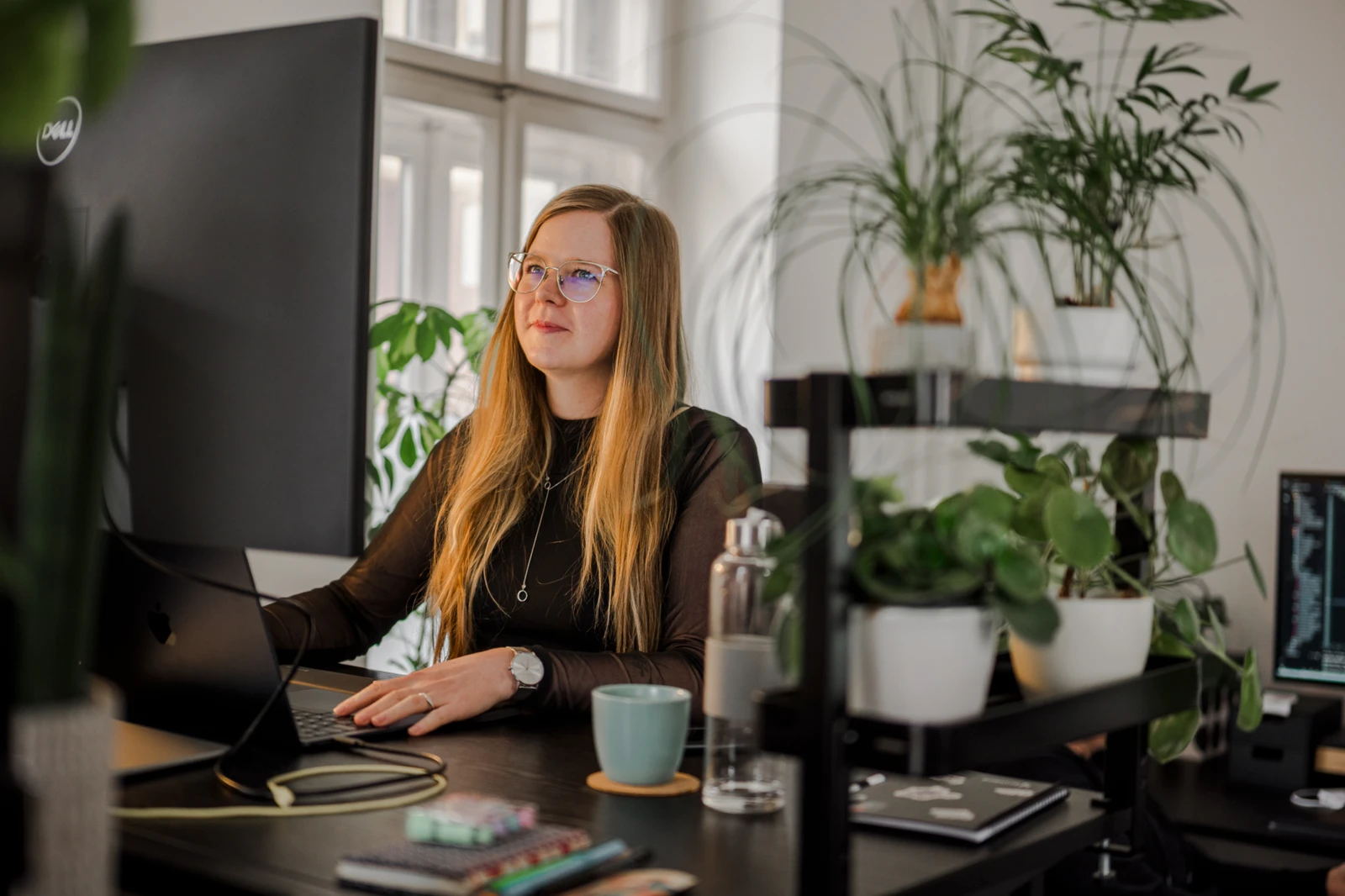
Our lead designer Helena Kočnar has experience from agency, product and e-commerce environments. She designs presentation websites, landing pages and web applications. She connects analysis and research with content structure, prototyping, testing and visual design. She can lead websites and simpler applications all the way to implementation. Design and delivery thus happen in one process, which reduces the loss of information at handovers.
For products with extensive data or more complex integrations, we bring in Trinera’s product developers.
Which first step to choose
Depending on the state of your project, we recommend:
- An audit, when you need to name the problems of your current website.
- Targeted research, when you need to get to know your users or validate important assumptions.
- Branding, if you lack a visual identity.
- An interactive prototype, when you want to test a specific design before delivery.
- The whole process from research to implementation, when you want the problem solved under one roof.
Planning a new website or a redesign?
Tell us what the website should enable and where you run into problems today. In an initial consultation, we will go through your goals and available materials and recommend a suitable first step.